


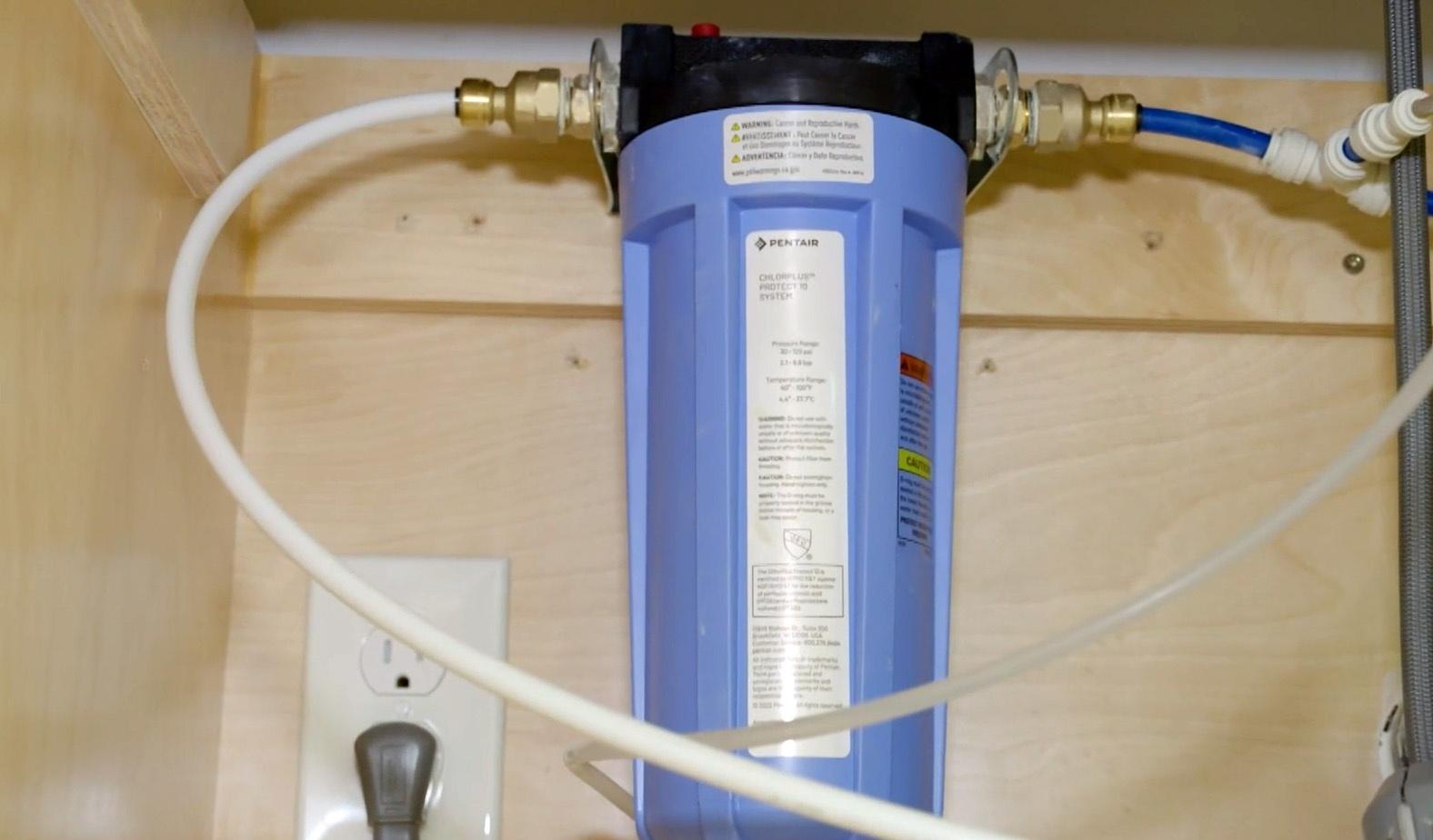
Well owners on Spokane’s West Plains are encouraged to use home water filters to remove dangerous “forever chemicals” — or PFAS — from their drinking water. But once a system is installed, how do you know it’s working? A new study led by researchers at the University of Colorado Boulder, in partnership with the West Plains Water Coalition and the Washington State Department of Health, aims to find out.
New Study from the Equal Water Lab
Riley Mulhern, PhD, an assistant professor of environmental studies, runs the Equal Water Lab at the University of Colorado Boulder. The group of researchers and students are focused on the science of drinking water exposure and other environmental risks. Their mission is to accompany communities, policymakers, utilities, government agencies, and others to support decision making that tackles environmental disparities and reduces health risks.
Mulhern will lead a study on Spokane’s West Plains to test both existing home filters and newly installed system. The goal is to provide clear, trustworthy information about filters that affected households can use to protect their drinking water.
How to Participate in the Study
The research team will invite West Plains well users to take part in multiple ways over the next few months. Phase 1 will test existing home filters. Sixty households with a filter already installed may receive free water testing to see how well their system is removing PFAS. Phase 2 will provide free filter installation and follow-up testing. A small number of high-risk households will be selected to receive free, professionally installed point-of-use or whole-house filters, along with water testing over time.
Affected residents are encouraged to attend a workshop to meet Mulhern and learn more about how to get involved:
Saturday, February 7, 2026
10:30 a.m. – Noon
Hilton Garden Inn
9015 W. Highway 2
Airway Heights, WA 99224
Participants will receive their own test results, helping academics and policymakers build knowledge that will support families across our community and nationwide.
West Plains PFAS Task Force Launches Home Filter Enrollment
The West Plains PFAS Response Task Force will soon provide filtration systems for some West Plains residents. The task force, comprised of elected leaders, subject matter experts, and citizen liaisons, was created last year to allocate $7.5 million from the Washington State Legislature for home filtration systems.
If you missed the January community meeting about the implementation of the filter program, the next task force meeting is Wednesday, February 11.
Also, the Washington Department of Health’s free kitchen filter program has been extended to 2027. West Plains well users with a certified PFAS test are eligible.
Media Coverage Continues to Grow
PFAS contaminated water is not unique to our area. Investigations are underway all over the country, especially near military bases and industrial facilities.
From the trusted PBS investigative journalists at FRONTLINE, comes Contaminated: The Carpet Industry’s Toxic Legacy, premiering on February 3. A joint investigation from FRONTLINE, The Associated Press, The Atlanta Journal-Constitution, The Post and Courier, and AL.com uncovers how PFAS chemicals once used in popular stain-resistant carpets ended up in the water in Georgia, Alabama, and South Carolina, as well as the ongoing health impacts. FRONTLINE airs Tuesday at 9:00 p.m. on KSPS PBS.
The West Plains PFAS contamination impacts hundreds of households on private wells. Long term exposure to the “forever chemicals” can cause serious health problems. Watch Forever Chemicals on the West Plains from KSPS PBS At Issue to learn more about the contamination and efforts to help homeowners in the area.