


Washington state legislators head back to Olympia this month for a short 2026 session facing a significant budget hole. Predictions for the current two-year budget range from a $1.5 billion shortfall to upwards of $4 billion or higher. And after a contentious 2025 session to pass a budget with a combination of cuts and new taxes, this year’s session will surely result in more tough decisions for Washington lawmakers.
Governor Ferguson Proposes Cuts Over Taxes in Supplemental Operating Budget
Just before Christmas — and after we recorded our conversation with Eastern Washington lawmakers for At Issue: The Olympia Agenda — Washington Governor Bob Ferguson announced his supplemental operating budget proposal for the upcoming session. Although Washington enacts budgets on a two-year cycle, the state can and does make changes with the supplemental budget during non-budget sessions.
As promised by the governor in earlier media interviews, his proposal does not include tax hikes but rather cuts and other measures to shore up what his office estimates is a $2.3 billion shortfall. Most significantly, the governor’s budget includes nearly $800 million in reductions to state agencies. It would also end two tax exemptions for large corporations, temporarily change how the state allocates Capital Gains Tax funds, and utilize $1 billion from the state’s Rainy Day Fund.
Governor Ferguson is also proposing $244 million in housing investments, $2 billion for transportation infrastructure, including the preservation and maintenance of Washington’s roads and bridges, and an additional $1 billion for the state’s aging ferry vessels.
Washington’s Largest State-Funded Housing Investment in a Supplemental Budget
In mid-December, Governor Ferguson announced $244 million in housing investments and signed an executive order to form a task force dedicated to the creation of a new housing agency.
“The need for more affordable housing is urgent,” Governor Ferguson said in a press release. “These historic investments will not only help respond to Washington’s housing affordability crisis — they help build a foundation of safety, security, and opportunity for thousands of Washingtonians.”
The proposal includes $225 million in bonds to the state’s Housing Trust Fund, which provides money needed to preserve and build affordable homes for those most in need. The governor’s office says the investment will build or preserve more than 4,000 units of housing.
Another $55 million would expand the Housing Trust Fund Preservation Program to include repairs for homes damaged in the devastating December floods.
No Proposed Tax Increases, but the Governor Does Support a Millionaires’ Tax
The same day Governor Ferguson released his proposed 2026 supplemental budget — which is absent of tax increases to solve the looming financial challenges — he did announce his support for a millionaires’ tax.
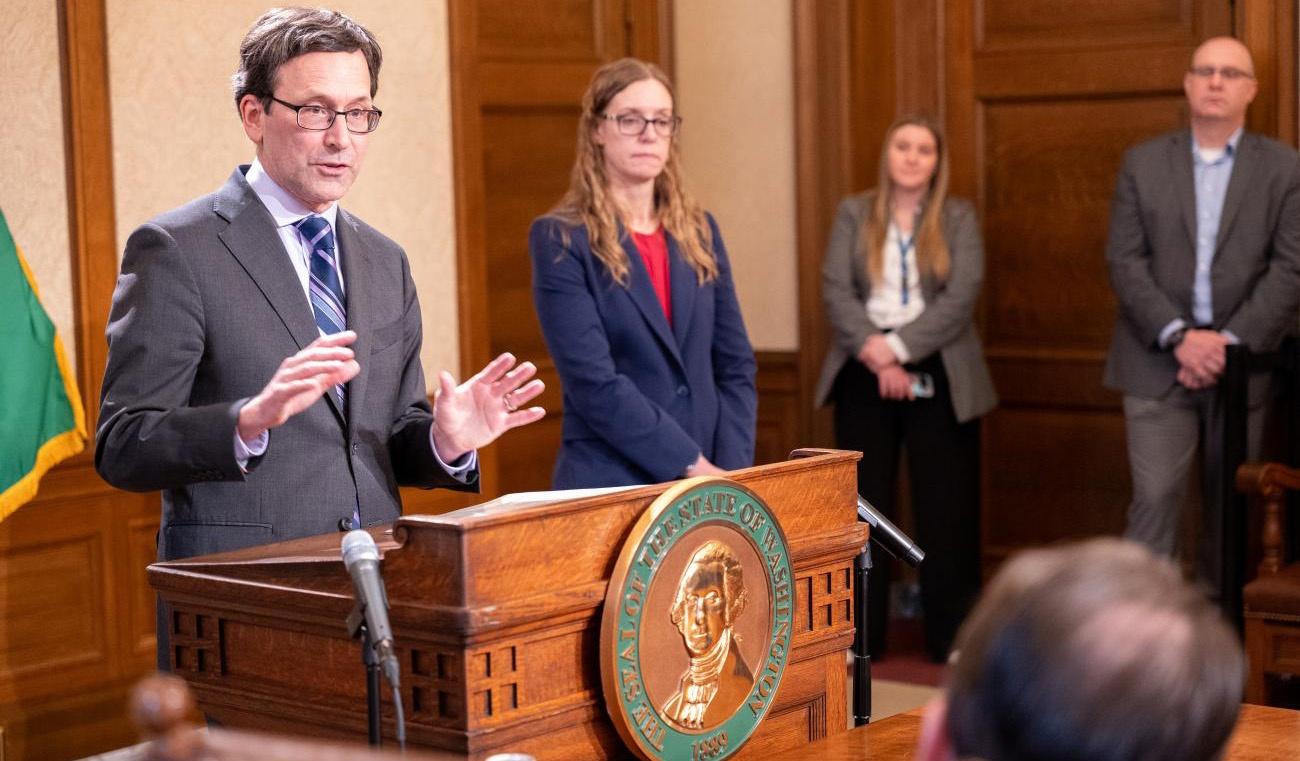
Ferguson emphasized during a December 23 press conference that such a tax would not solve the short-term budget gap. The revenue would not be realized for several years. Instead, he says, the money would repay working families and small business owners most impacted by the state’s unequal tax system.
Washington ranks next to last for fairness and equality in the tax system, meaning those who make the least pay a larger share of their income. According to the governor’s office, Washington families whose income is in the bottom 20% pay 13.8% of their total income in taxes, while those whose income is in the top 1% pay only 4.1% of their income in taxes.
Under the proposal, people who make more than $1 million of income in a year would be taxes on earnings over the $1 million threshold. It would not impact those whose net worth reaches $1 million.
According to Ferguson, the tax would impact .5% of Washingtonians and raise at least $3 billion a year.
Tough Decisions for Washington Lawmakers in 2026
Washington state legislators start the session on January 12. While they tackle the biggest issue — the state’s budget deficit — they’ll also be discussing hundreds of other bills on housing, transportation, education, health care, public safety, and more. The session is expected to close on March 12.
More from At Issue
- Eastern Washington lawmakers discuss their top priorities ahead of the 2026 session on At Issue: The Olympia Agenda.
- Spokane government and business leaders discuss the top issues they’ll be advocating for on the At Issue Podcast.