


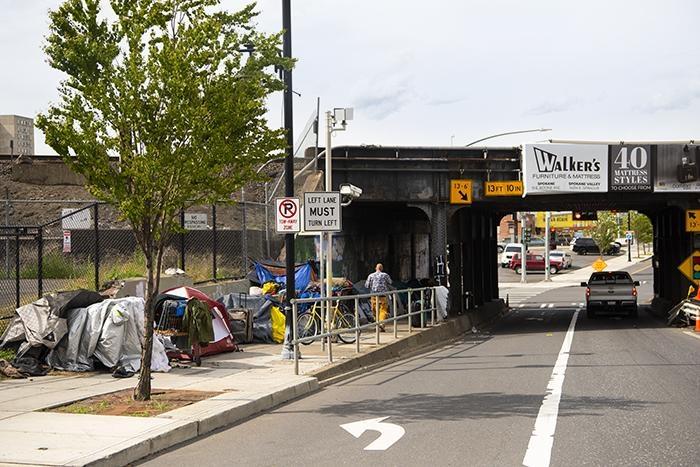
The issue of enacting and enforcing public camping laws in the city of Spokane has been highly controversial for years, and the latest proposals are no different. After public comment, debate, and some lengthy city council meetings, the council approved two new ordinances on June 30. Proponents say they will address some of the homelessness problems in the city.
We talked extensively about the proposals during the May episode of At Issue, Can We Fix Downtown? Spokane Mayor Lisa Brown unveiled her new homelessness strategy this spring, headlined by her H.O.M.E. Starts Here initiative to offer more housing resources and assistance to stop homelessness before it begins.
The city council approved two portions of the plan without much debate, which included housing insecurity and prevention plans as well as new requirements for inclement weather shelter activation. However, the proposed ordinance to address unauthorized camping caused division among council members and a lot of response from the community.
The community, in fact, has taken an active part in the lawmaking process. In 2023, Spokane voters overwhelmingly approved Proposition 1 which made it illegal to camp within 1,000 feet of schools, parks, and daycare facilities. This April however, the Washington Supreme Court struck down the measure, citing that it attempted to change how an existing policy is implemented rather than creating a new law. Under Washington law, local initiatives must be legislative in nature, meaning the city council needed to act.
Council members Michael Cathcart and Jonathan Bingle immediately sought to pass the same measure through a council vote. It was never voted on. Instead, the mayor announced the H.O.M.E. Starts Here strategy, which included an ordinance on the engagement and enforcement of unauthorized camping.
On June 16, the city council was set to vote on the proposed ordinance. But after debate and public testimony pushed the meeting into the night, the council decided to defer the vote.
The biggest sticking point? A proposed seven day waiting period to prioritize providing services to individuals before removing illegal encampments. Two weeks later, the council voted 5-2 to approve a new version of the ordinance without the waiting period.
According to the city, the newly approved Obstruction and Unauthorized Camping Ordinance consolidates existing laws on unauthorized camping into a single, unified policy while addressing the intent of voters who approved Proposition 1. The amended ordinance does prohibit unauthorized camping, but it emphasizes engagement over enforcement by connecting people to navigation services.
“We all agree that people should not be sleeping on the streets. The Obstruction Ordinance makes unauthorized camping a misdemeanor offense in not only the Proposition 1 area, but also makes it illegal citywide at all times,” said Council Member Zack Zappone in a media release. “Enforcement will emphasize engagement first to get individuals to services and then citation if there is non-compliance.”
Council Member Paul Dillon added that the council will be evaluating and monitoring the implementation of the new ordinances while continuing to address upstream solutions for permanent housing and addiction treatment.
Council Member Jonathan Bingle opposed the ordinance. He believes it falls short of what many voters and downtown business owners wanted because it lacks teeth concerning enforcement.
“The Spokane City Council has once again ignored the will of the voters by passing so-called ‘Prop None,’ a diluted replacement for the voter approved 2023 anti-encampment initiative,” said Bingle in a statement following the vote. “For months, Spokane voters, business owners, and neighborhood leaders have called for sensible action to fix the crisis on our streets. They supported Prop 1 not because it was extreme, but because it was straightforward, enforceable, and necessary.”
The council also passed an ordinance prohibiting aggressive solicitation. The mayor signed both ordinances on July 7 and they will go into effect on August 6.